
Reccy makes gear for India's trails, heat, and monsoons — and we're on a mission to help 10 million Indians get out. This piece first ran in our newsletter, Get Out with Reccy. Subscribe on Substack to get the next one first.
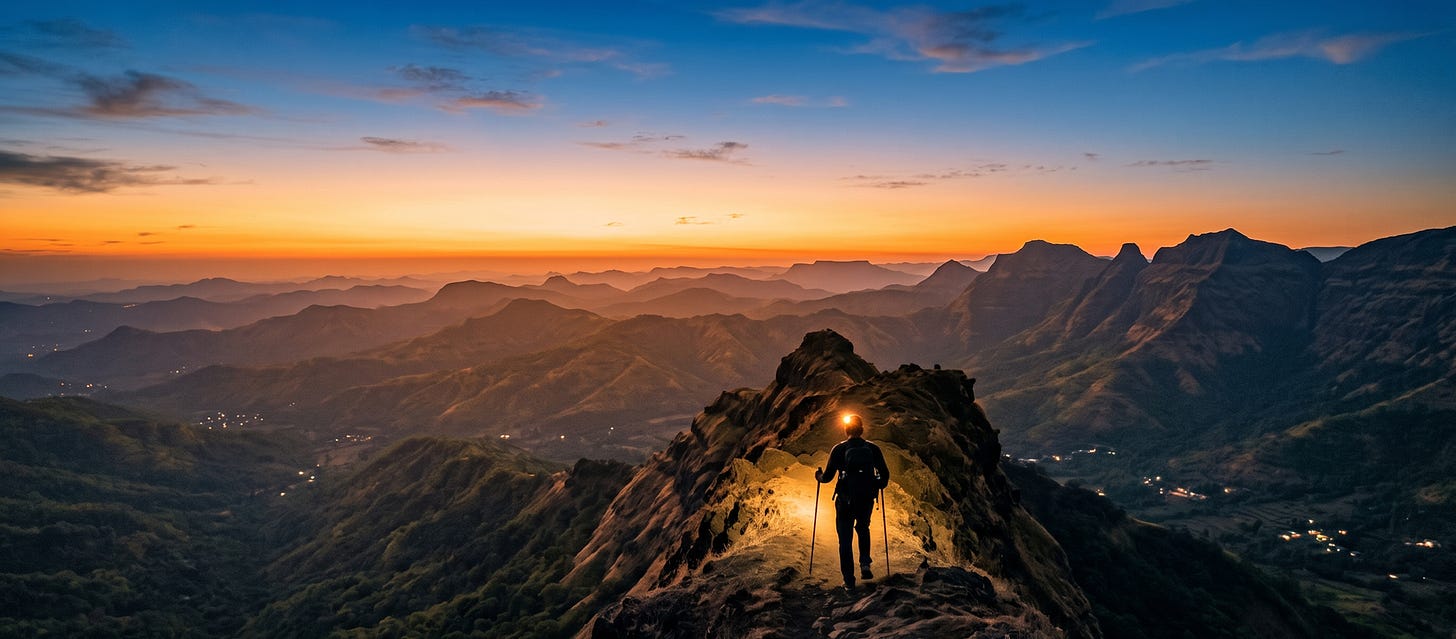
It’s 5:40pm on a fort trail. The descent is taking longer than the map app said it would, and somewhere in the last twenty minutes the light went from “fine” to “not fine.” Your phone is at 12%, and you’ve been using it as your flashlight for the last kilometre because that’s what’s in your pocket. Somewhere in a bag you didn’t pack is a ₹300 headlamp that would have solved this ten minutes ago.
None of these ten things are complicated. None of them are expensive. Pack them and most of what can go wrong outdoors stops being a problem and just becomes an inconvenience.
1. Water - and more than you think you need
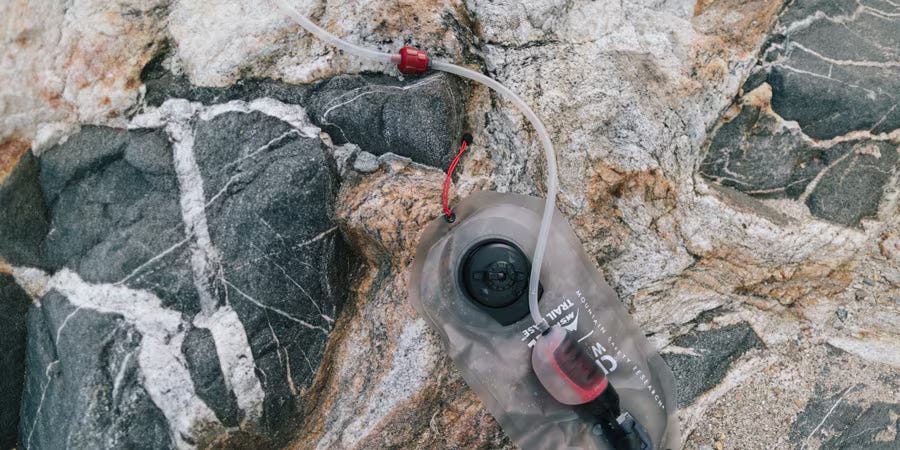
Drink roughly half a litre for every hour of moderate hiking — more if it’s hot, more if you’re gaining altitude. Past the two-hour mark, an ORS sachet does more for you than a second bottle of plain water. Pre-hydrate before you start; don’t try to catch up once you’re already behind.
Carry: 1.5–2L for a half-day out, electrolytes/ORS if you’re crossing the two-hour mark.
2. Extra food - the part you don’t plan to eat
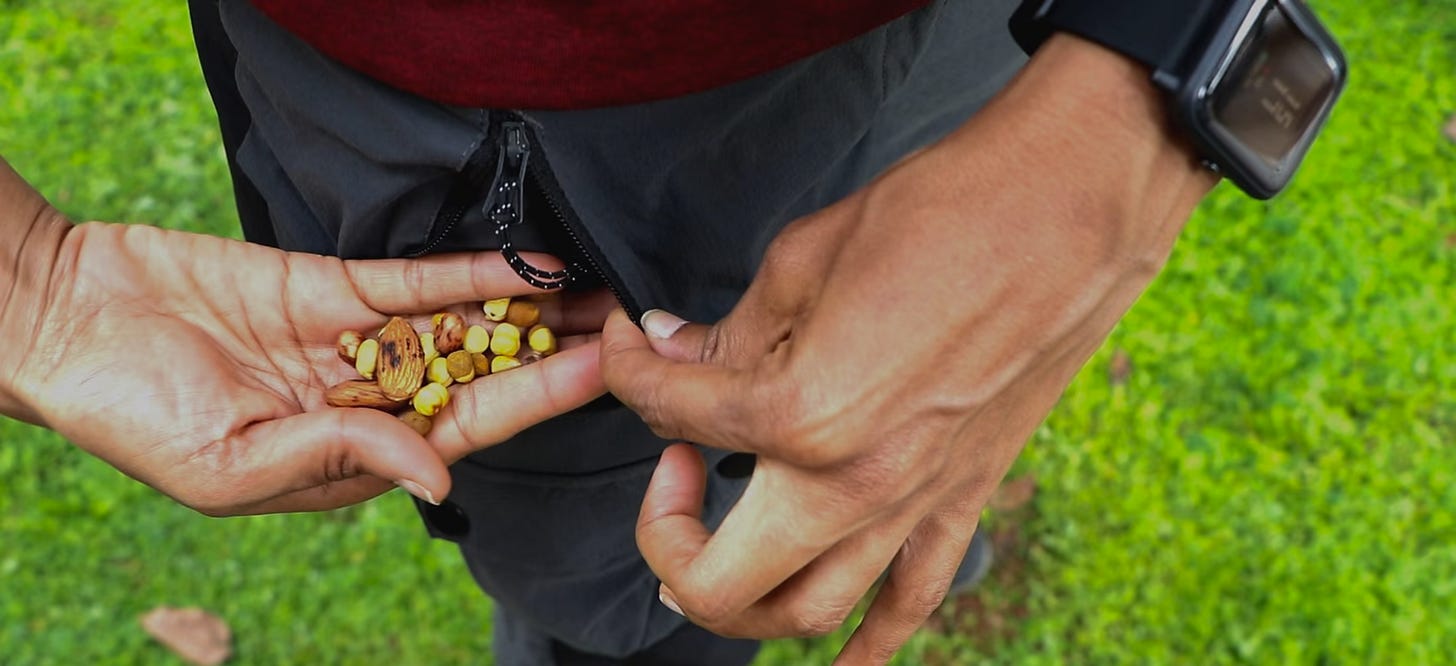
This isn’t your lunch. It’s the reserve for when the trail takes longer than you budgeted for. Chikki, gur-chana, roasted chana, dry fruits, a laddu or two — dense, doesn’t melt, doesn’t need a wrapper you’ll lose track of. Packaged snack wrappers are one of the biggest waste problems on Indian mountains, so whatever you carry in, carry the wrapper back out.
Carry: enough for one extra “meal” you’re not planning to need.
3. Navigation that works without signal
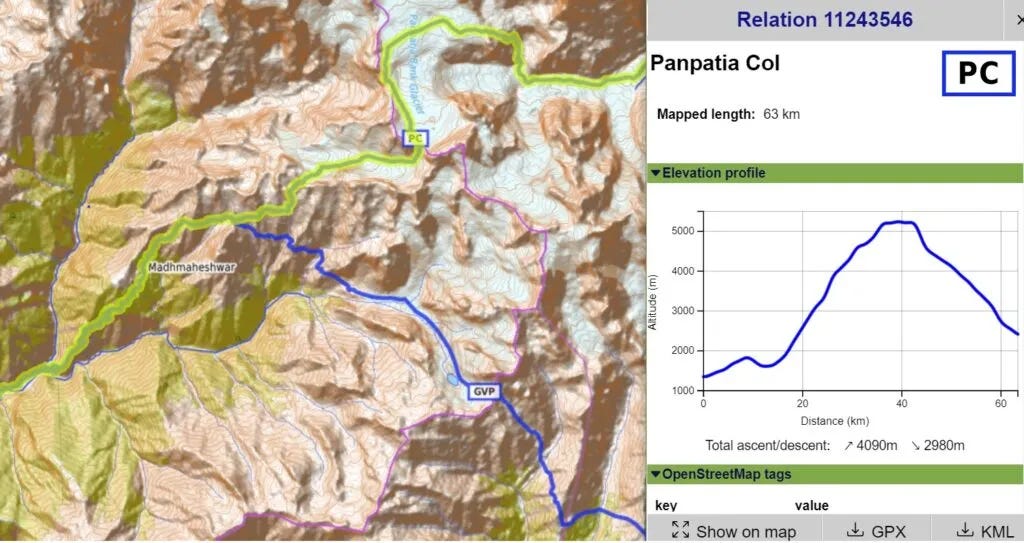
Download offline maps before you lose signal, not after. Switch to airplane mode with low brightness — your GPS keeps working, and your phone stops draining battery searching for a network. Navigation is one of the fastest ways to kill a phone, so a power bank isn’t a nice-to-have here — it’s part of the system.
Carry: offline maps downloaded in advance, phone on airplane mode while navigating, a power bank.
4. A headlamp - your phone doesn’t count
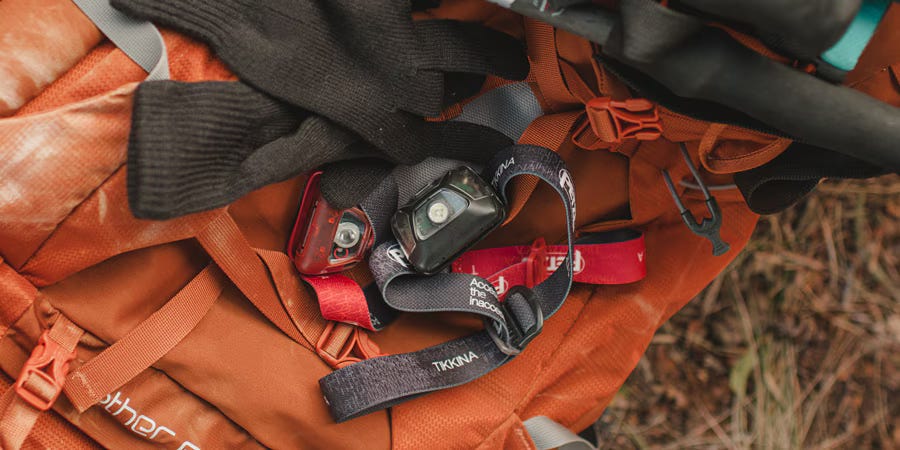
This is the one item that earns its place hardest. A phone flashlight puts out somewhere between 30 and 60 lumens. An entry-level headlamp starts at 300. Running your phone as a flashlight also burns roughly 1% of its battery every five minutes — the exact battery you need for navigation and, if it comes to it, an emergency call. Running out of light is one of the most common reasons a hike turns into a search-and-rescue call. A headlamp is an item that removes an entire category of problem.
Carry: a headlamp, charged, every time - even on a hike you’re certain will end before dark.
5. A small first aid kit
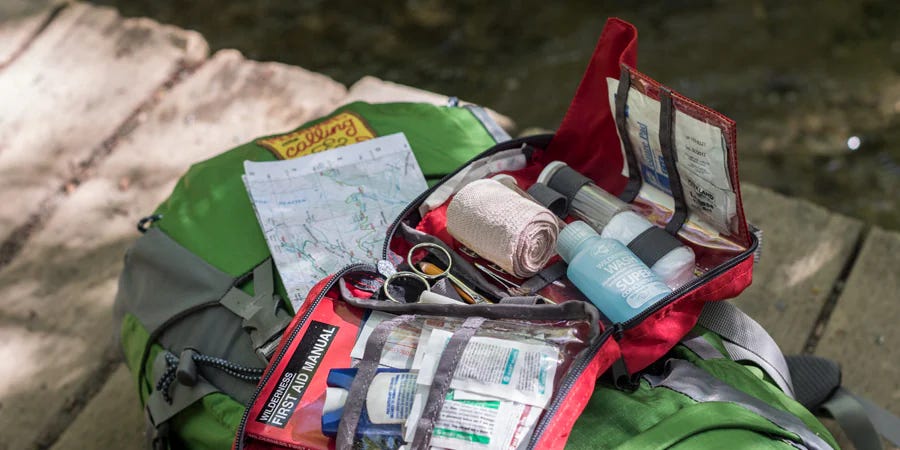
Falls and blisters are, by a wide margin, the two things that actually happen to people outdoors. Most pre-made kits miss the one thing that matters most: antihistamines. Build your own instead of trusting a generic box.
Carry: bandages, blister care or moleskin, antiseptic wipes, tape, painkillers, antihistamine, anti-diarrheal, ORS, and anything you personally take.
6. Rain protection
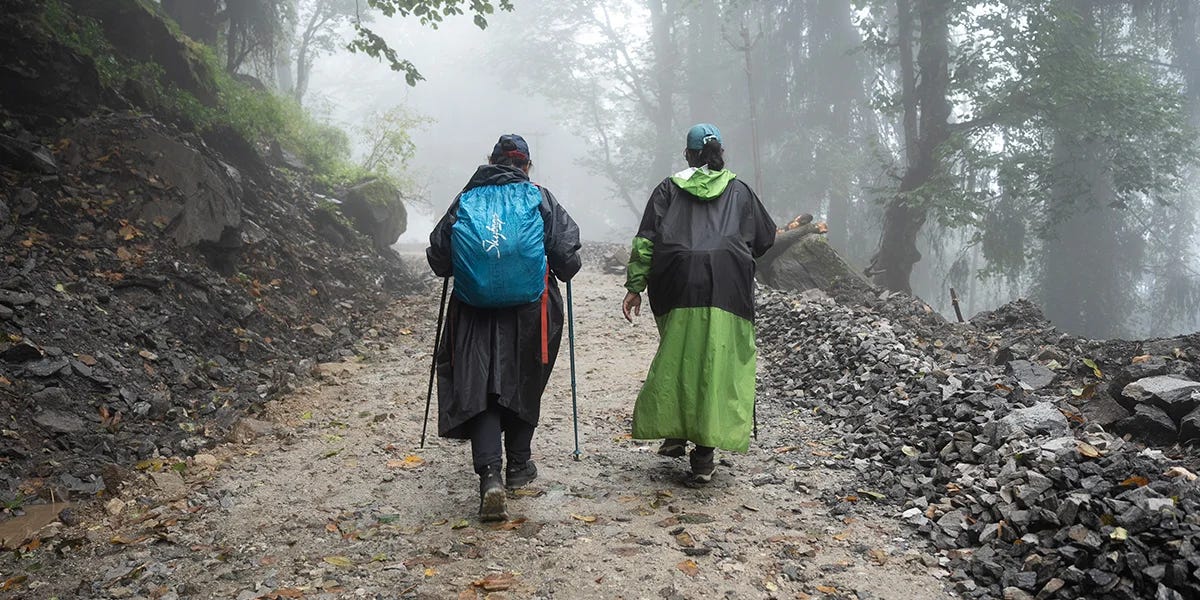
Getting wet is a danger in July as much as December — a soaked cotton tee at altitude, with wind on top of it, is how hypothermia starts, and it doesn’t need snow to do it. A poncho costs somewhere between ₹200 and ₹500 and folds down to nothing. The only real rule here: never cotton.
Carry: a poncho, always in the bag, regardless of forecast.
7. One extra warm layer
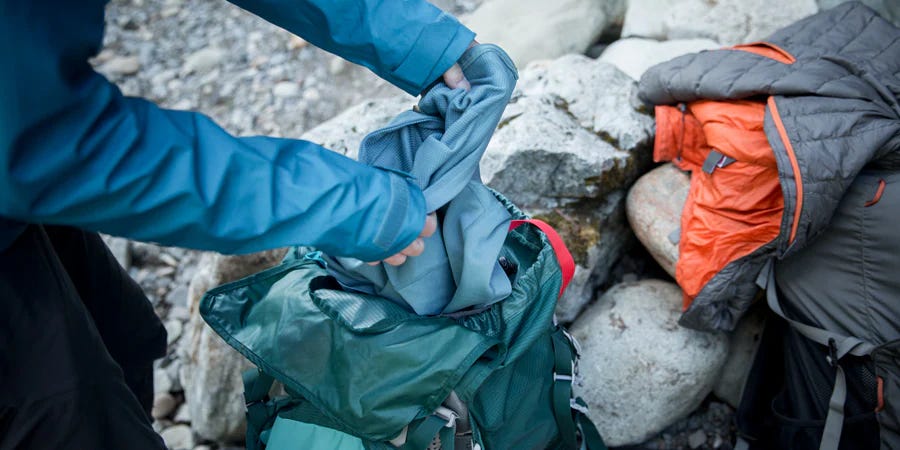
Temperatures at a summit or ridge can run 10°C or more below what you felt at the trailhead. You don’t need a jacket for every scenario — you need one packable warm layer you can add when the wind picks up.
Carry: a light fleece or insulated layer that packs small.
8. Sun protection
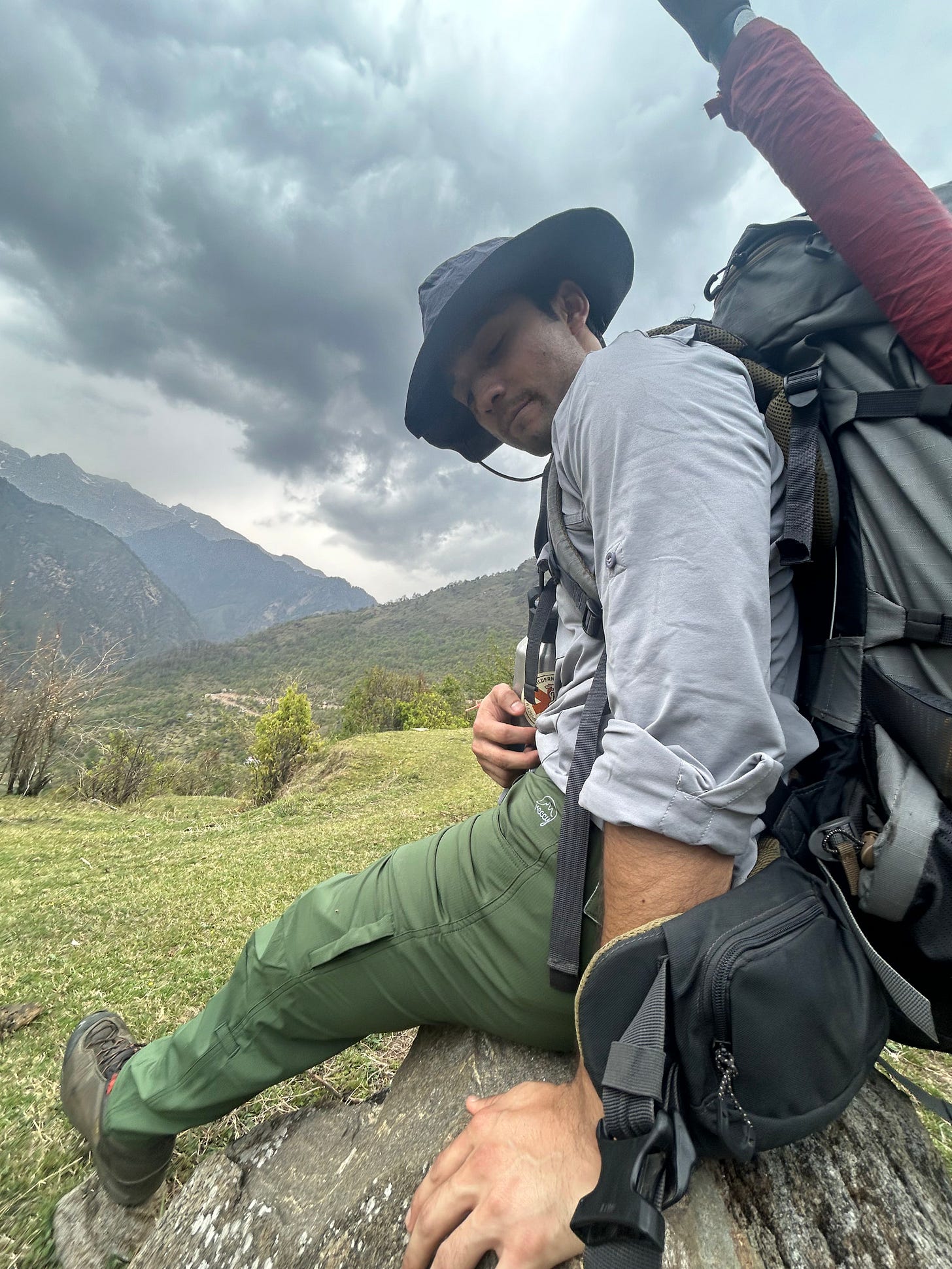
Up to 80% of UV still gets through on a cloudy day — “overcast” isn’t “safe.” That’s true on a Sahyadri fort as much as it is at altitude.
Carry: sunscreen (and reapply it), sunglasses, a cap.
9. A whistle
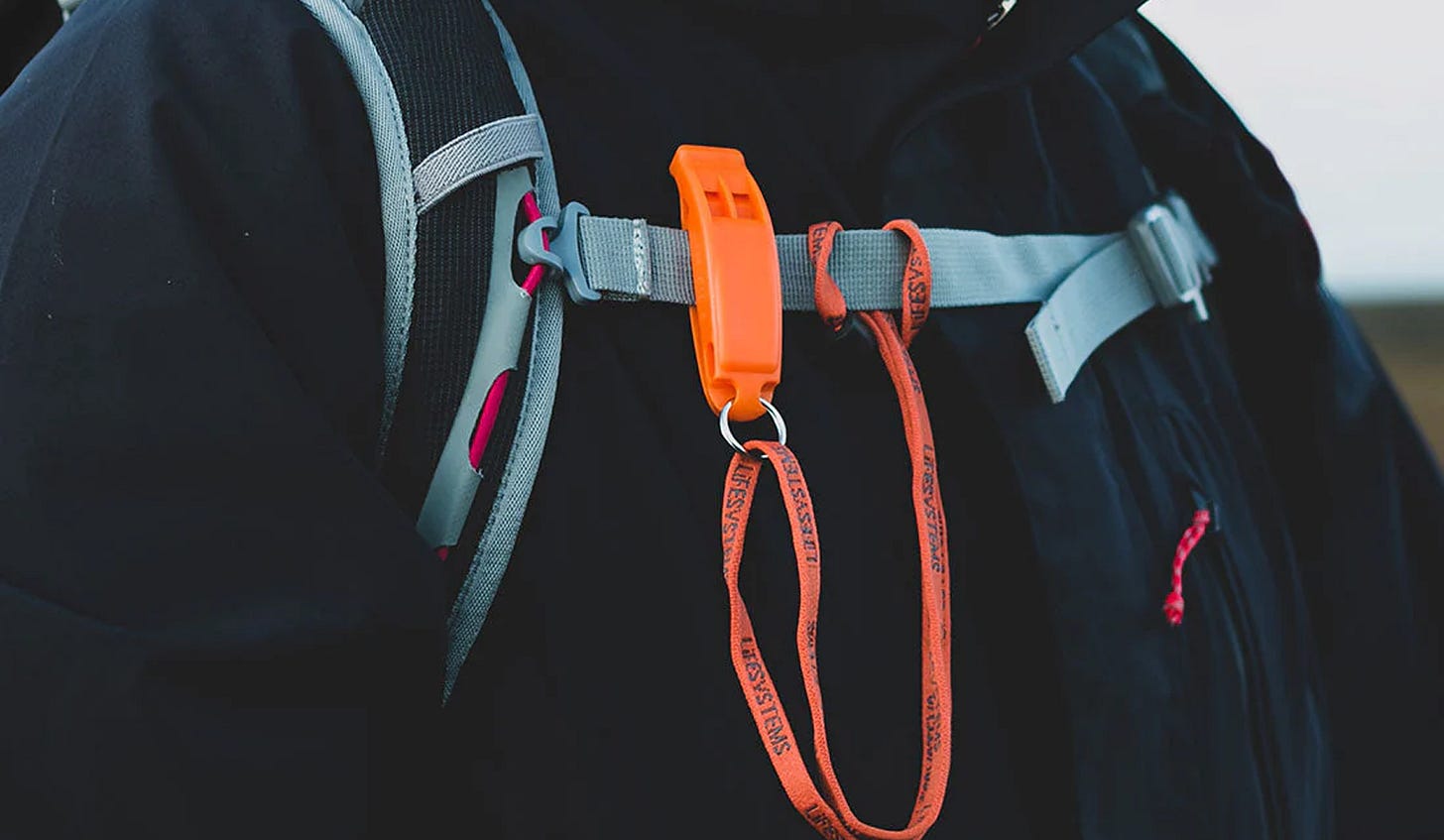
Three short blasts, repeated at intervals, is a distress signal understood well beyond hiking circles. It carries roughly a mile — further than your voice, and it doesn’t get tired the way you will. Get a pealess one; it still works wet. Clip it to your pack strap where you can reach it, not buried in a pocket you’ll be fumbling for.
Carry: a whistle, clipped somewhere accessible.
10. An emergency blanket
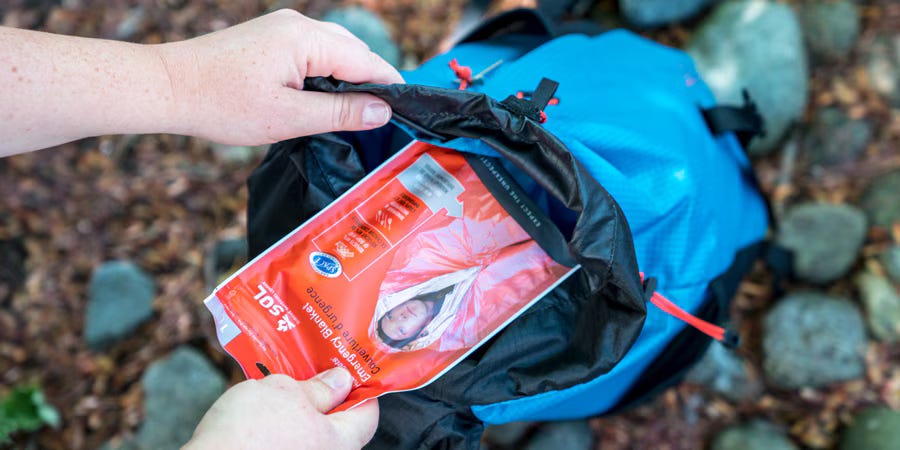
The item almost nobody carries and almost everybody should. A mylar emergency blanket traps up to 90% of your body heat, blocks wind and rain, and doubles as a signal for anyone searching for you if you lay it out reflective-side-up. It costs about ₹200 and folds down to the size of a deck of cards. An unplanned night outdoors is a cold-and-wet problem far more often than it’s a wildlife problem — this is what actually gets you through it.
Carry: one emergency blanket, permanently in the bag.
Worth adding, if you’re going multi-day: a small multi-tool and a length of duct tape. Not essential for a Sunday day hike, but the moment a strap tears or a stove needs a fix two days from a road, you’ll wish you had it.
That’s the list. Tn items, under 2kg combined, costing less than a pair of trekking shoes. None of this is about being afraid of the outdoors — it’s the opposite. Carrying the right ten things is what lets you stop thinking about what could go wrong and actually be out there.
This isn’t an exhaustive list — it’s the floor, not the ceiling. Add what your specific trail, season, and experience call for.
GET OUT.
