
Reccy makes gear for India's trails, heat, and monsoons — and we're on a mission to help 10 million Indians get out. This piece first ran in our newsletter, Get Out with Reccy. Subscribe on Substack to get the next one first.
Picture the scene. You’re somewhere above 3,000 metres — maybe on day two of a Himalayan trek, or riding the Manali-Leh highway on a Royal Enfield, or sitting in a car watching the Spiti Valley unfold through the windscreen. It’s May or June. The air is thin and cool. There may be clouds. There is probably snow somewhere in view.
Sun protection is the last thing on your mind. If anything, the cold makes it feel unnecessary. You’re not at a beach. You’re not sweating under a blazing summer sky. You feel fine.
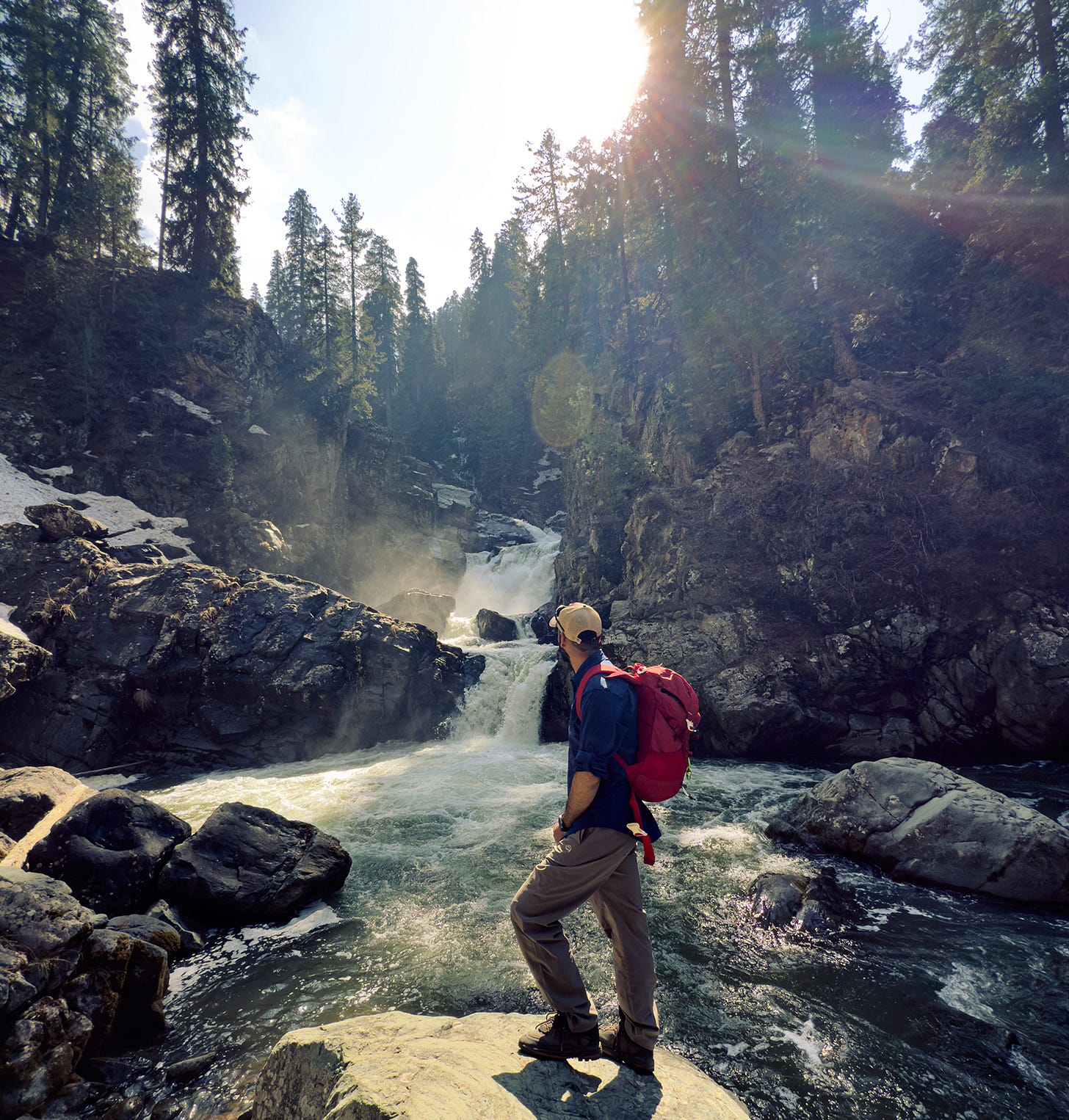
This is the exact situation where the sun causes the most damage — precisely because nothing about it feels dangerous.
This newsletter explains what’s actually happening at altitude, why it matters regardless of how you’re travelling, and what genuinely works to protect yourself.
What Changes at Altitude
At sea level, the Earth’s atmosphere acts as a filter. It absorbs a significant portion of the sun’s ultraviolet radiation before it reaches you. As you gain altitude, that filter gets thinner. There is simply less atmosphere between you and the sun. The result: UV levels increase by roughly 10 to 12 percent for every 1,000 metres of altitude gained.
At 3,500 metres — the altitude of a typical Himalayan acclimatisation stop, the Leh valley, or the approach to Rohtang Pass — you are exposed to approximately 35 to 40 percent more UV than at sea level. At 4,500 metres, which you pass through on the Manali-Leh highway or on routes like the Stok Kangri approach, the increase is close to 50 percent. This is not a marginal difference. It is a significantly more intense sun, arriving without the atmospheric softening you’re accustomed to at lower elevations.
And that’s before the terrain gets involved.
What snow does
Snow is one of the most reflective surfaces on Earth. Fresh snow reflects up to 80 percent of UV radiation — meaning it bounces the sun’s radiation back upward off the ground. On a Himalayan trail with snowfields, or on a high-altitude road flanked by snow, you are not just being hit by UV from above. You are being hit from below as well, off the reflected surface. The underside of your chin, your nostrils, your lower face, the inside of your ears — areas you have almost certainly never thought about applying sunscreen to — receive significant reflected UV exposure.
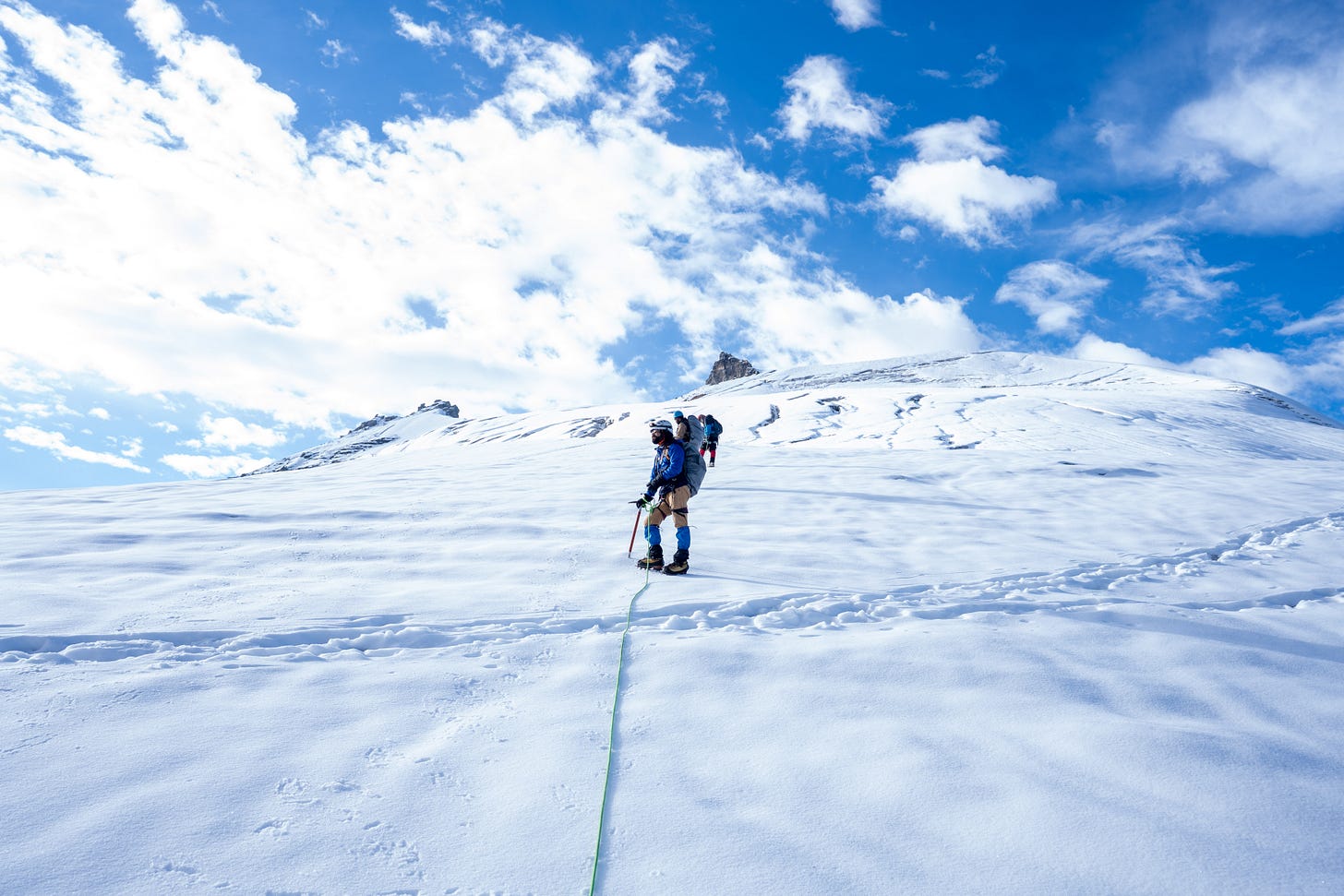
This double-sided exposure is why people return from Himalayan trips with sunburn on unusual places. Not just the nose and forehead, but below the jawline, on the neck, on the lips. The sun came from both directions.
What clouds don’t do
This is the one that surprises people most. Clouds do not block UV radiation in any meaningful way. Up to 80 percent of UV rays pass straight through cloud cover. The sky can be white and overcast, the temperature can feel cool, and the UV exposure can be almost identical to what you’d experience under a clear sky.
Cool, cloudy days at altitude are some of the most dangerous for UV exposure precisely because nothing prompts you to protect yourself. You feel no heat. You don’t feel the sun. You skip the sunscreen. And you come back with a burn — or worse, with damage you won’t notice for years.
At 4,000 metres on a cloudy day with snow on the ground, you may be absorbing more UV than a clear summer afternoon in Mumbai. It just doesn’t feel that way.
The One Thing Most People Don’t Protect
Snow blindness. Most people who’ve heard the term assume it’s something that happens to mountaineers on serious expeditions. It is not. It happens to trekkers on the Hampta Pass crossing. It happens to tourists sitting in a jeep driving through Nubra Valley with the window down. It is one of the most common and avoidable medical problems in high-altitude travel, and almost no one prepares for it adequately.
Snow blindness is a sunburn of the cornea — the transparent outer layer of your eye. When UV radiation reflects off snow or ice and enters the eye without protection, it damages the corneal surface exactly the way direct sun damages unprotected skin. The medical term is photokeratitis.
The most important thing to understand about snow blindness is its timing. You do not feel it happening. Symptoms appear 6 to 12 hours after exposure — typically in the evening or at night, long after you’ve come off the trail or the road. When they arrive, they arrive badly: severe eye pain, inability to open your eyes in light, intense tearing, a gritty burning sensation as though sand has been poured into both eyes. It is not subtle.
The good news: it resolves on its own in 24 to 48 hours with rest in a darkened room, cool compresses, and artificial tears. No permanent damage in most cases. The prevention is entirely simple: sunglasses or goggles that block 99 to 100 percent of UV radiation, worn consistently whenever you are outside at altitude — including on overcast days, including in the car with the window down.
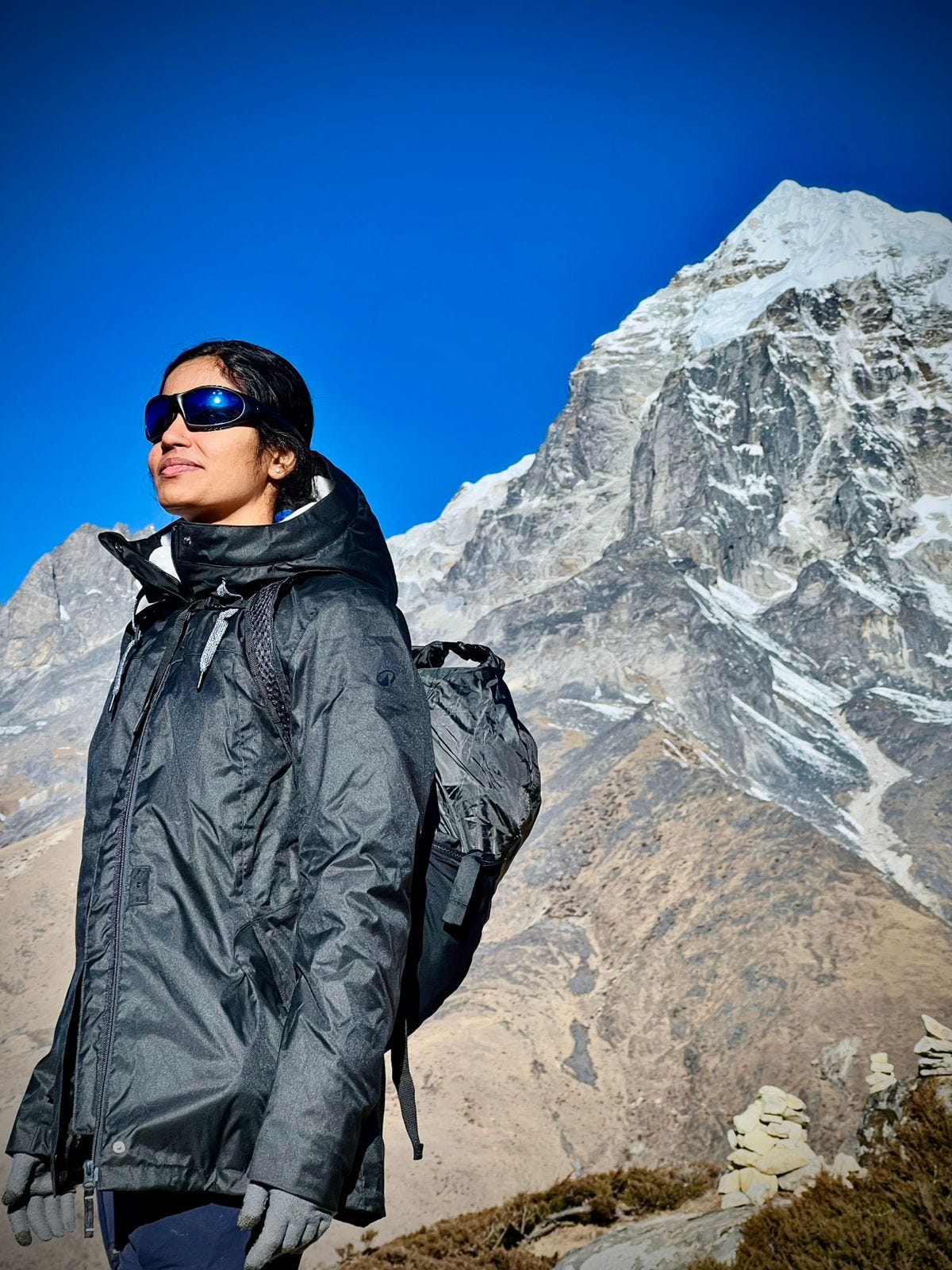
Standard fashion sunglasses are often not enough. The lens needs to cover the full eye including from the sides — wraparound frames or glacier glasses with side shields are the standard choice on Himalayan routes for exactly this reason. UV can reach the eye from the sides as well as from directly in front.
Protecting Your Skin
Sunscreen — how to actually use it
Most people using sunscreen at altitude are underprotected despite applying it. There are two reasons for this: they apply too little, and they don’t reapply often enough.
For extended outdoor time at altitude, use SPF 50 or higher, broad-spectrum (meaning it protects against both UVA and UVB). The broad-spectrum label matters — SPF alone only measures protection against UVB, the burning ray. UVA penetrates deeper and causes longer-term skin damage. You want both covered.
Apply it 20 to 30 minutes before you go out, to all exposed skin. Then reapply every two hours — and if you’re trekking and sweating, every 90 minutes is more realistic. Sweat degrades sunscreen meaningfully. A full coat applied at 7 AM and not reapplied is providing significantly less protection by 10 AM than the SPF number suggests.
The spots people consistently miss: ears, the back of the neck, lips, the area under the chin, and hands and wrists — particularly the backs of hands, which face upward when using trekking poles and receive direct sun for hours. Lips need an SPF lip balm, not regular sunscreen. The underside of the chin needs attention any time there’s snow below you, because that’s where the reflected UV hits.
Clothing — more reliable than sunscreen on long days
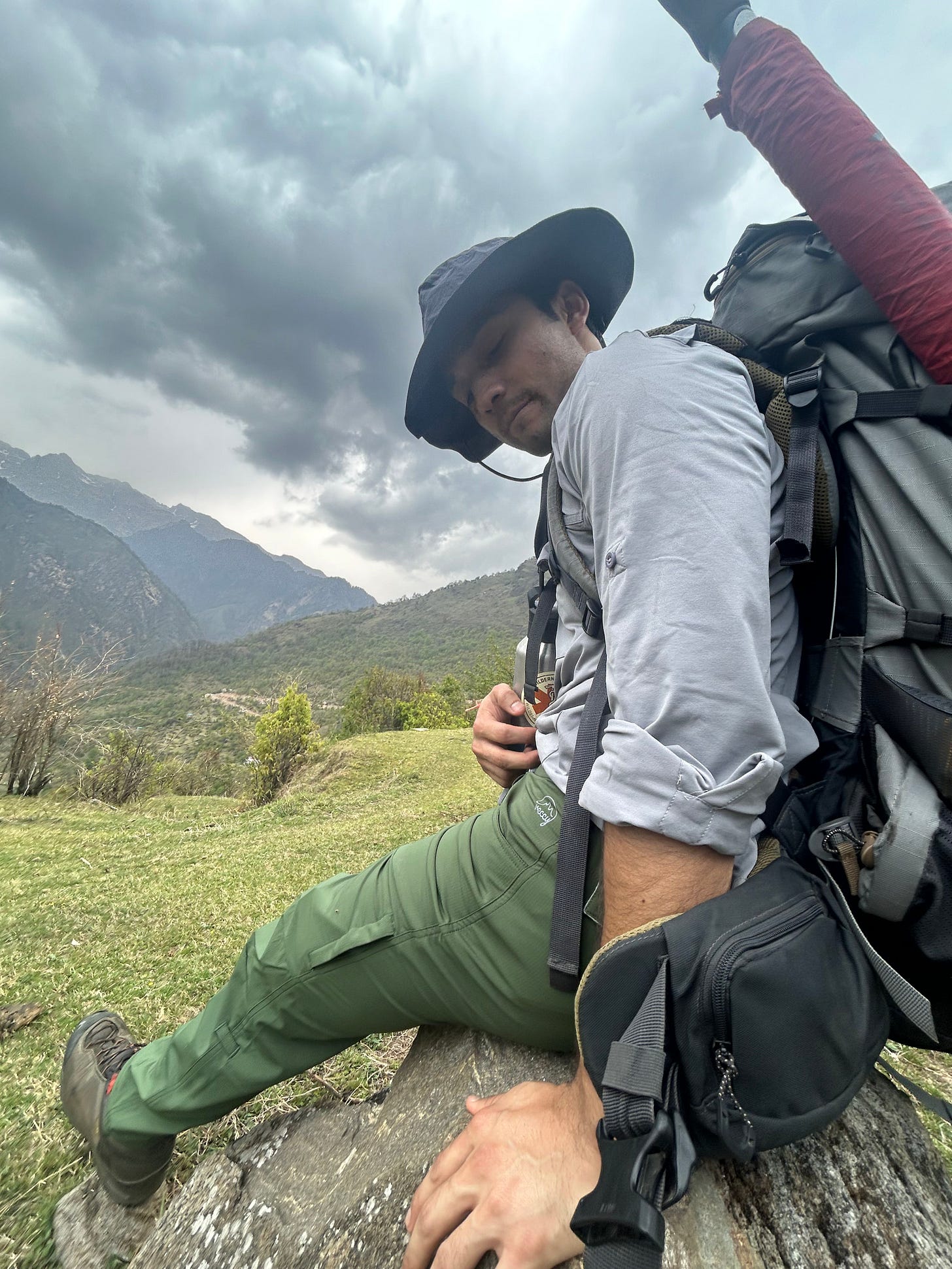
Here’s something worth knowing: on a full day of trekking or riding at altitude, clothing is actually more reliable sun protection than sunscreen. The reason is straightforward — clothing doesn’t sweat off, doesn’t need reapplication, and doesn’t have gaps because you missed a spot. Once it’s on, it stays effective.
Look for UPF-rated clothing. UPF stands for Ultraviolet Protection Factor and works like SPF but for fabric. A UPF 50 garment allows only 2 percent of UV to pass through — blocking 98 percent. A standard white cotton t-shirt, by comparison, has a UPF of around 5. It is almost no protection at all.
For high-altitude days, the practical kit is: a long-sleeve UPF-rated shirt covering your arms and torso, a wide-brim hat with at least a 3-inch brim covering your face and neck, and a buff or neck gaiter for the neck and lower face. This combination covers the majority of your body surface without any ongoing effort. Sunscreen then handles the face, ears, hands, and lips — the exposed areas that clothing can’t reach.
One specific note for riders on the Manali-Leh or Spiti circuits: the combination of direct sun, reflected UV off tarmac and snow, and constant wind means that several hours on a bike at altitude is among the highest UV-exposure scenarios in Indian travel. A full-face helmet protects significantly. But exposed hands on the handlebars, any gap between jacket sleeve and gloves, and any exposed neck receive extended, sustained UV. These are the areas to prioritise on a riding trip.
Quick Reference
Sunscreen
SPF 50 or higher, broad-spectrum (UVA + UVB)
Apply 20–30 minutes before going out
Reapply every 2 hours — every 90 minutes if actively sweating
Don’t miss: ears, lips (SPF lip balm), under chin, backs of hands and wrists, back of neck
Eyes
Sunglasses or goggles blocking 99–100% UV — non-negotiable at altitude
Wraparound frames or side shields to block UV from all angles
Wear even on overcast days — clouds block almost no UV
In a car or jeep with windows down: still needed
Clothing
Long-sleeve UPF 50+ shirt for arms and torso
Wide-brim hat — minimum 3-inch brim
Buff or neck gaiter for the neck and lower face
Sunscreen covers what clothing can’t: face, ears, lips, hands
When it matters most
Above 3,000m — regardless of cloud cover or temperature
Any time there’s snow on the ground — UV reflects upward off the surface
Cloudy days especially — the feeling of safety is misleading
Multi-day trips — cumulative exposure adds up even when no single day feels intense
The mountains don’t feel dangerous in the way that a beach at noon does. The air is cool, the landscape is vast, the sun seems no closer than it does at home. But the physics are unambiguous — the higher you go, the more UV arrives, and the less atmosphere there is to stop it.
One tube of SPF 50 and a decent pair of wraparound sunglasses. That’s the full cost of entry for most Himalayan trips. The damage they prevent takes years to show up, which is precisely why so few people bother. Bother anyway.
Get Out.
Planning a Himalayan trip — trek, bike, or road trip — this season? Forward this to your group. Sun protection is the preparation almost nobody makes, and the one that matters every day you’re up there.
