
Reccy makes gear for India's trails, heat, and monsoons — and we're on a mission to help 10 million Indians get out. This piece first ran in our newsletter, Get Out with Reccy. Subscribe on Substack to get the next one first.
You’re three or four hours into a climb and something changes. Your legs, which were fine an hour ago, suddenly feel like they’re filled with wet cement. Your pace collapses. Your head goes foggy, your mood drops, and the next switchback looks less like a trail and more like a personal insult. You tell yourself you’re just unfit, or tired, or having a bad day.
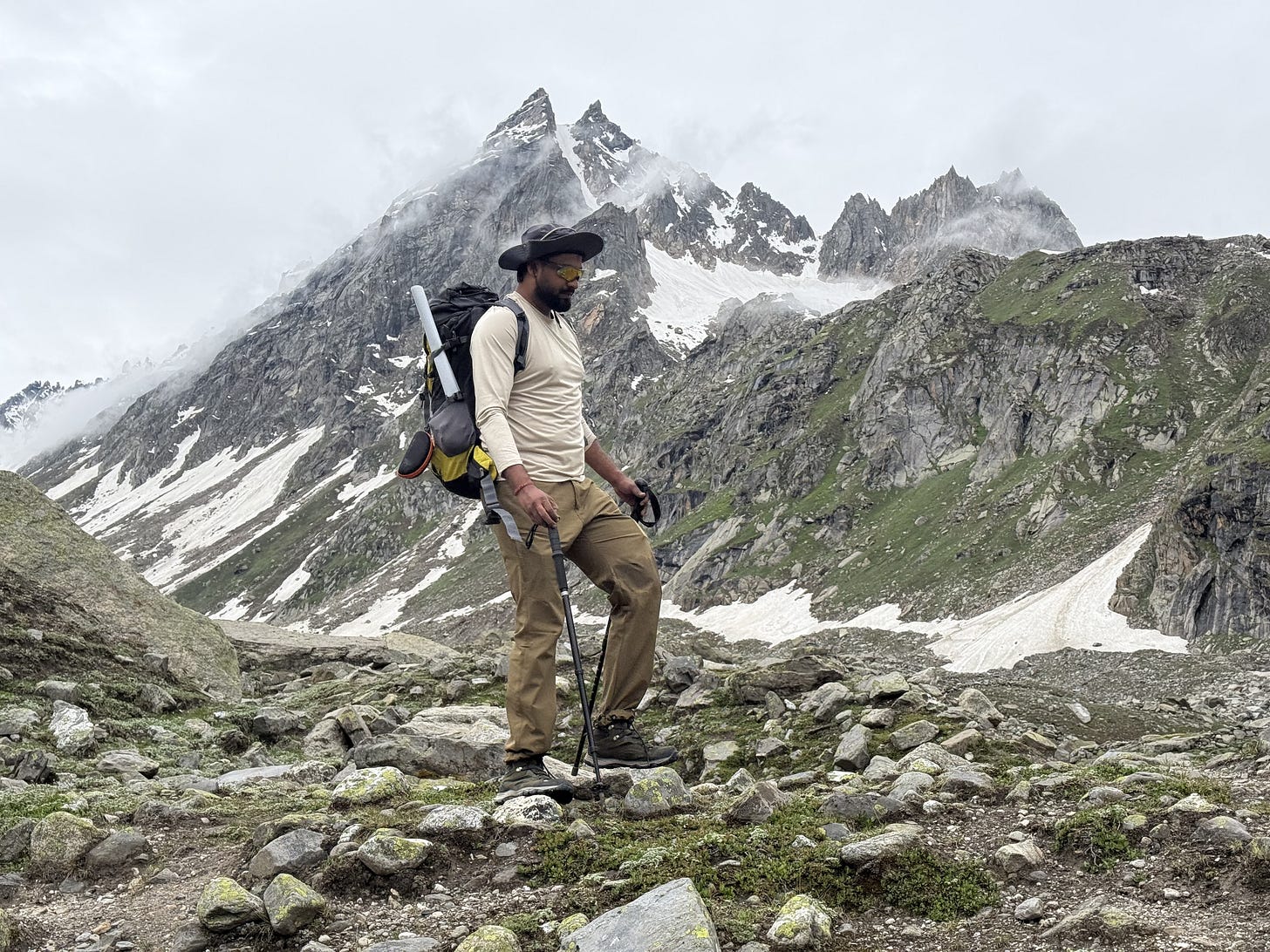
You’re not. You’ve run out of fuel. And it was almost entirely preventable.
What you eat on a trek - and, crucially, when - is one of the biggest levers you have over how the day feels, and one of the most misunderstood. So rather than hand you a rigid list of “trek foods,” this newsletter explains the simple logic of how your body fuels a long day outdoors. Once you understand the why, you can walk into any kitchen, any local shop, any dhaba, and know exactly what to reach for.
How Your Body Actually Fuels a Trek
Your body runs a long day of walking mostly on carbohydrates. It’s the fuel it reaches for first for sustained effort, because carbs are quick to convert into usable energy and gentle on the stomach compared to fat or protein.
Here’s the catch that catches everyone out: you can only store a small amount of it. The body holds roughly 1,600 to 2,000 calories’ worth of carbohydrate - as glycogen, in your muscles and liver - and that’s it. At a steady hiking pace with a pack, you burn through that reserve in roughly three to five hours - depending on your pace, the load, and your fitness - if you don’t top it up. When it runs low, your blood sugar drops, and your brain - which runs almost entirely on glucose - pulls the emergency brake to protect itself. That is the wall. Cyclists call it “the bonk.” Whatever you call it, it is not a failure of willpower. It is an empty tank.
The bonk isn’t weakness. It’s an empty fuel tank - and once you’ve hit it, you’re playing catch-up against your own body for the rest of the day.
Which leads to the single most important rule of eating on a trek, the one everything else hangs off.
The Rule That Prevents the Bonk
Eat small amounts of carbohydrate regularly - roughly every 45 to 60 minutes - and start before you feel hungry. By the time you feel hunger or that first dip in energy, you’re already behind, and it’s very hard to catch up mid-climb. Think of it as topping up a tank steadily rather than waiting for the warning light.
The amount is small: something in the region of 150 to 250 calories an hour is plenty for most people, though on a longer or harder day you’ll want to lean toward the upper end, or a little above. That’s a handful of something, not a meal. The goal isn’t to feel full - it’s to never let the tank run dry. Set a mental checkpoint at every rest stop, or an alarm on your phone if you tend to forget.
For those regular top-ups, you want fast-acting carbohydrates - foods your body can turn into energy quickly.
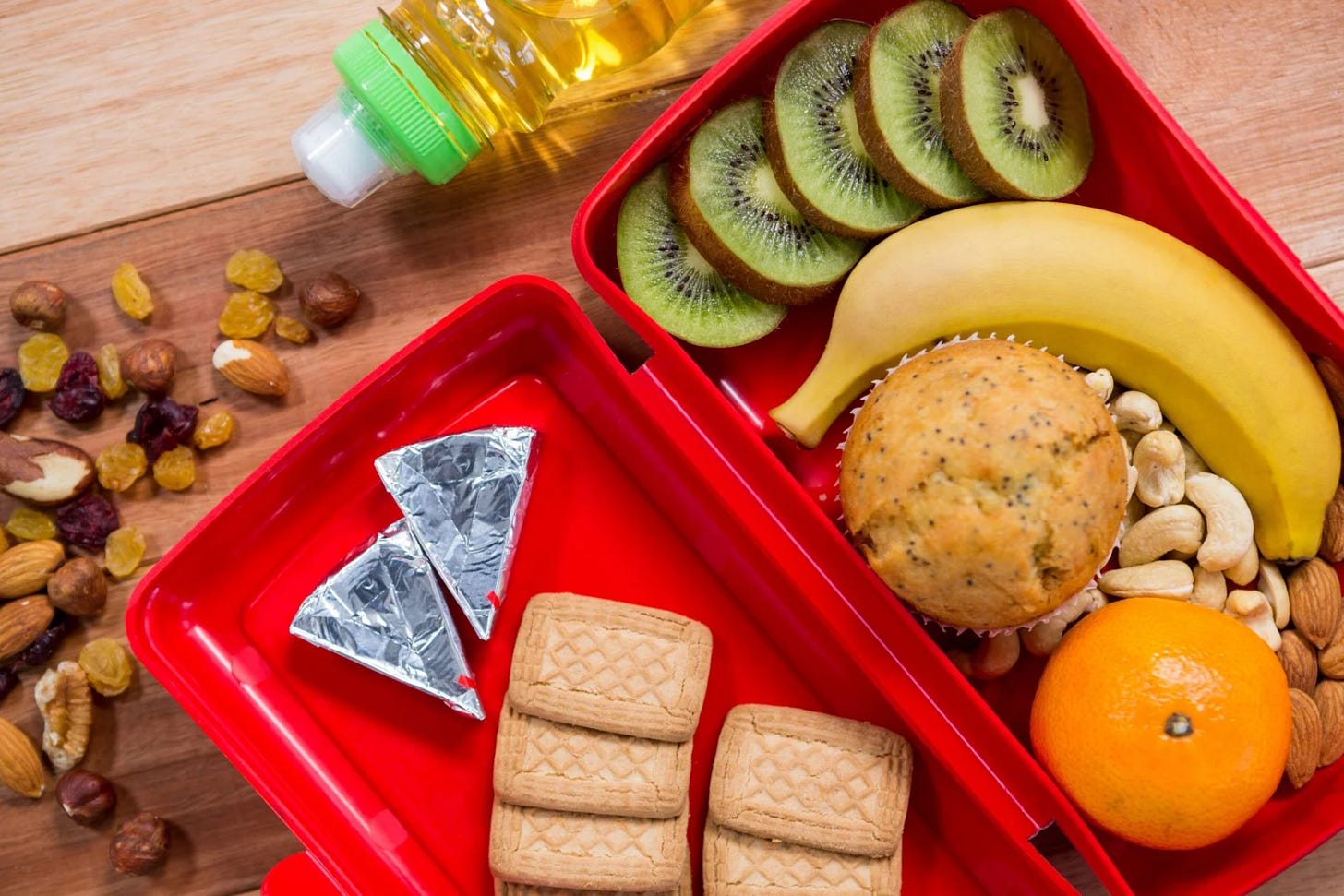
Foods that deliver fast carbs
Gur (jaggery), dates, bananas, chikki, raisins, a boiled potato with salt, or a piece of any sweet you’d normally feel guilty about. On the trail, sugar is a tool. Gur is a particularly good one - it’s a quick carb that also carries iron and minerals, and tends to give a gentler spike than refined sugar.
This is also why the old habit of gur (jaggery) and roasted chana on a trek endures - it’s fast carbs and a little protein, light to carry, and it works.
Carbohydrates: Your Engine
Carbs are worth understanding in two speeds, because you need both on a trek.
Fast carbs - for the climb, right now
The need: quick energy during effort, especially on steep sections. The reason: simple carbs break down fast and hit your bloodstream quickly, which is exactly what you want mid-climb. These are your every-hour top-ups, covered above - gur, dates, banana, chikki, dried fruit.
Slow carbs - for lasting energy
The need: a steady, longer-burning base of energy across the day. The reason: complex carbs digest more slowly, releasing energy gradually rather than in a quick spike. These belong in your meals - breakfast and camp dinners - not in your pocket for the climb.
Foods that deliver slow carbs
Rice, roti, oats, poha, upma, dalia (broken wheat), potatoes, and parathas. Sattu - roasted gram flour mixed with water - deserves a special mention: it’s a slow-release carb and a source of protein and iron, needs no cooking, and has fuelled labourers and travellers across eastern India for centuries. A sattu drink or a sattu paratha is close to purpose-built trek food.
Protein: For the Evening, Not the Trail
Here’s something that surprises people: protein does very little to fuel you while you’re actually walking. Its job is repair, not propulsion.
The need: repairing the muscle you’ve worked all day, so you can go again tomorrow. The reason: trekking, especially the downhills, creates small tears in muscle fibres, and protein provides the raw material to rebuild them. That rebuilding happens at rest - mostly overnight - which is why protein matters most in your evening meal, not your trail snacks. On a single day hike you barely need to think about it. On a multi-day trek, it becomes the difference between waking up ready and waking up wrecked.
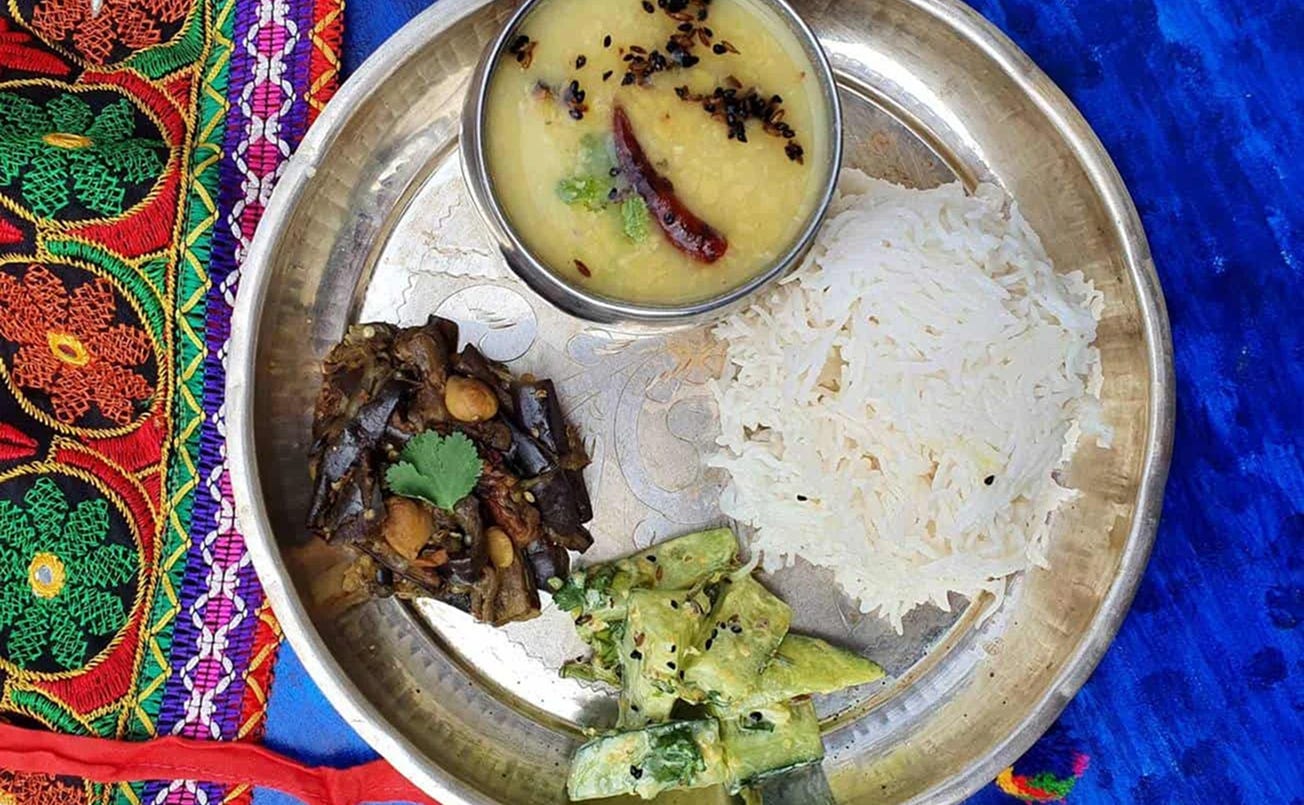
Foods that deliver protein
Dal, rajma, chole, eggs, paneer, curd, and - again - sattu. A classic camp dinner of dal-chawal with a side of curd, or rajma-rice, or eggs with roti, covers both the slow carbs your glycogen needs and the protein your muscles need to repair. You don’t need protein powder or bars; real food does this better.
Fat: Fuel for the Long Haul
Fat is the quiet workhorse of a multi-day trek, and its main virtue is density.
The need: maximum energy for minimum pack weight, and a slow, steady burn between meals. The reason: fat carries more than twice the calories per gram of carbs or protein, so it’s the most weight-efficient fuel you can carry — a real advantage when everything is on your back for days. It also digests slowly, which helps with satiety and provides a low, steady trickle of energy. One important limit: because it burns slowly, fat cannot rescue you from a bonk — that job belongs to fast carbs. Fat is for the long game, not the emergency.
Foods that deliver fat
Peanuts, almonds, walnuts, cashews, peanut butter, ghee, seeds, and coconut. A handful of nuts at a rest stop, ghee in your morning paratha, or peanut-jaggery laddoos are ideal - they pair fat with carbs for both immediate and lasting energy. On multi-day treks, nuts and nut butters earn their place in the pack better than almost anything else.
Before You Start: The Day Before and Breakfast
You can’t fuel a hard day entirely on the trail - you have to begin with the tank already full.
The night before a big day, eat a carbohydrate-rich dinner. This tops up the glycogen stores you’ll draw on all of the next day - a plate of rice or roti with dal does the job perfectly. Then eat a real breakfast one to two hours before you start walking: something carb-focused with a little protein, and not too heavy on oil or fibre, which can leave you feeling sluggish. Poha, upma, oats, parathas, or eggs with toast are all solid. The principle is simple - start with full tanks, because you can never quite catch up once you’re on the trail.
Don’t Forget Water - Fuel Needs Fluid to Work
You can eat perfectly and still fall apart if you’re dehydrated. Even mild dehydration flattens your energy, and it also blunts your appetite - which makes you eat less, fuel worse, and spiral downward. Food and water are a team; one doesn’t work without the other.
How much, and when
A good baseline is around half a litre of water per hour of moderate walking. In heat, direct sun, or at altitude, that climbs toward three-quarters to a full litre an hour, since dry mountain air and heavier breathing pull extra water out of you. As with food, the trick is little and often: sip small amounts steadily rather than gulping a lot at rest stops. And as with food, thirst lags behind need - by the time you feel thirsty you’re already mildly dehydrated, so drink on a rhythm, not on thirst.
Water alone isn’t enough on a long day
The need: on efforts beyond about two hours, or in real heat, you’re not just losing water through sweat - you’re losing salts, mainly sodium. The reason it matters: sodium is what lets your body actually hold on to the fluid you drink. Drink only plain water across a long, sweaty day and you can dilute your blood sodium to the point of a genuine medical problem - hyponatremia - whose early signs (headache, nausea, confusion) are easy to mistake for ordinary tiredness. This isn’t a reason to fear water; it’s a reason to pair it with salt on longer days.
Simple ways to replace salts
Nimbu paani with a pinch of salt and some gur, an ORS sachet, or plain water alongside salty snacks - roasted chana, namkeen, a salted paratha. Any of these covers it. You don’t need branded electrolyte tablets, though they’re convenient; the goal is simply water plus sodium, not water on its own.
The simplest field test
Check your urine. Pale straw colour means you’re hydrated; dark yellow means drink more. It’s crude, it’s free, and it’s more reliable than waiting to feel thirsty.
Day Hike vs Multi-Day: What Changes
For a day hike, don’t overthink it. A good breakfast, fast-carb snacks every hour, enough water, and one proper meal is all you need. Protein and fat barely matter over a few hours — just keep the carbs coming and you’ll feel strong.
For a multi-day trek, the logic widens. Now calorie density matters, because you’re carrying it all — so fat earns its place. Protein matters, because you need to repair overnight and start fresh each morning. And you’re thinking in days, not hours: a carb-heavy dinner and breakfast to bracket each day, steady carb snacking in between, and enough total food that you’re not ending each day in a deep deficit.
Notice that almost nothing here is exotic or expensive. Gur, chana, dates, nuts, poha, dal, rice, roti, sattu, eggs - this is ordinary Indian food, and it happens to be excellent trek fuel. That’s the real point of understanding the logic instead of memorising a list: carbs to move, protein to recover, fat to last. Learn that, and you can fuel a trek from a village shop as well as from a fancy outdoor store - probably better.
Eat early, eat often, start full. Your legs will thank you on the fourth hour of the climb.
Get Out.
Know someone who always hits a wall halfway up and blames their fitness? Forward this to them - it’s almost never fitness.
